Machine Learning with PyTorch and Scikit-Learn: Develop machine learning and deep learning models with Python
Develop machine learning and deep learning models with Python
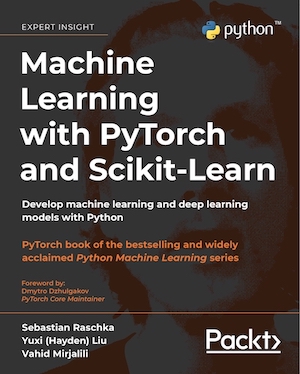
Overview
This book provides a comprehensive guide to building machine learning and deep learning models using PyTorch and Scikit-Learn. It is designed for developers, data scientists, and students who want to deepen their understanding of applied machine learning with practical Python examples. The content covers foundational concepts, model building, optimization techniques, and deployment strategies, enabling readers to bridge the gap between theory and practice in real-world problem solving.
Why This Book Matters
Machine Learning with PyTorch and Scikit-Learn stands out by combining two of the most popular and powerful Python libraries for machine learning and deep learning into one cohesive resource. It equips practitioners with hands-on skills to construct efficient ML pipelines and understand the inner workings of modern models. In the fast-evolving AI landscape, this book empowers readers to stay current with practical tools, fostering innovation and effective implementation in various domains such as computer vision, natural language processing, and predictive analytics.
Core Topics Covered
1. Fundamentals of Machine Learning with Scikit-Learn
The book begins by grounding readers in core machine learning concepts using Scikit-Learn, including data preprocessing, model selection, and evaluation metrics.
Key Concepts:
- Supervised and unsupervised learning
- Feature engineering and scaling
- Cross-validation and hyperparameter tuning
Why It Matters:
A solid foundation in these concepts ensures that models are robust and generalize well to unseen data, which is critical for producing reliable predictions in any applied scenario.
2. Deep Learning with PyTorch
This topic covers neural network fundamentals and advanced architectures using PyTorch’s dynamic computation graph for building deep learning models from scratch.
Key Concepts:
- Tensors and automatic differentiation
- Building and training neural networks
- Convolutional and recurrent neural networks
Why It Matters:
Understanding deep learning frameworks like PyTorch enables practitioners to tackle complex tasks such as image recognition, speech processing, and sequence modeling with flexibility and efficiency.
3. Model Optimization and Deployment
The book explores techniques to optimize model performance and guides readers through deploying machine learning models in production environments.
Key Concepts:
- Regularization and dropout
- Model interpretability and explainability
- Exporting models and integrating with applications
Why It Matters:
Improving model accuracy and ensuring smooth deployment are essential steps for transforming experimental models into practical solutions that deliver value in professional settings.
Technical Depth
Difficulty level: 🟡 Intermediate
Prerequisites: A basic understanding of Python programming, fundamental statistics, and introductory machine learning concepts is recommended. The book progressively builds complexity, making it accessible to readers with some background in data science while also offering in-depth insights for more experienced practitioners.